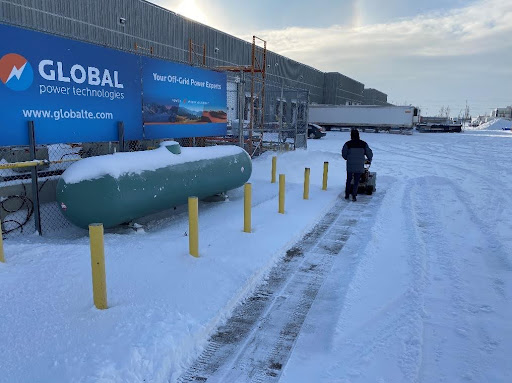
When winter arrives in Calgary, the importance of reliable power becomes more apparent than ever. That’s why all our products are rigorously tested to ensure they perform reliably in the coldest temperatures. Our engineering team has a dedicated outdoor testing area, allowing them to conduct real-world cold-weather product testing for several months each year. One challenge with outdoor testing is the countless trips outside in cold, snowy, or icy conditions to monitor equipment performance.
Accumulations of fresh snow can quickly turn to ice, creating hazardous conditions for anyone walking on it. Our team consistently steps up to clear snow before it becomes a risk, helping to prevent slips and falls. Beyond the obvious dangers of braving the cold and navigating slippery surfaces, shovelling snow is physically demanding and often overlooked as a risk, especially for those with pre-existing health conditions, particularly related to the heart.
This year, Calgary experienced its first snowfall over the weekend of October 11th/12th. This early snowfall marked the official onset of winter conditions for the region. While Calgary’s average October snowfall is about 45 mm (1.77 inches) over four days, the city has seen significant variations in recent years. On average, Calgary experiences 134 cm of snowfall annually - a slight increase from previous years. This gives us plenty of opportunities to find efficient ways to clear snow, allowing our engineering team to continue product testing throughout the winter. Fortunately, we’ve found a solution that lets us clear a path to our outdoor testing area quickly and effectively.
For those who guessed a snowblower, you’re correct! This equipment has proven invaluable - not only for clearing snow but also for preventing ice buildup and reducing the risk of slips and falls. It also minimizes the amount of time our team is exposed to the cold. As a self-propelled machine, the snowblower significantly reduces physical strain compared to traditional shovelling, providing an added benefit of injury reduction.
After hands-on training sessions, our team is now very comfortable using the snowblower. At a moment’s notice, we’re ready to minimize any disruptions caused by snow and keep our product testing on track all year round.
We’re also keeping an eye on the latest advancements in snow removal technology. New algorithms like EBSnoR use event-based camera data to detect and remove snowflakes from visual feeds, helping autonomous vehicles operate more safely in winter. The DSOR filter is another innovation, removing falling snow from LiDAR point clouds to improve the performance of LiDAR systems in severe winter weather.
Cold-weather product testing continues to evolve, with recent research focusing on new maneuver selection algorithms for vehicles operating on icy or snowy surfaces. These advancements aim to enhance control and reduce accident risks during the winter months, ensuring the reliability and safety of equipment in challenging conditions. As winter progresses, we remain committed to safety, innovation, and keeping our team and products ready for whatever the season brings.